Emergency Plumbing Services Across Illinois
Plumbing disasters strike without warning—burst pipes during an Arctic cold snap, raw sewage bubbling up through basement drains, or a ruptured water heater flooding your utility room. Call our emergency dispatch line immediately at (217) 216-8586.
Every minute water flows uncontrolled increases the risk of mold growth and structural destruction. We connect you with local, licensed contractors available for urgent off-hours dispatch across Illinois.
Immediate Action Steps Before the Plumber Arrives
- Shut Off the Main Water Supply: Turn your main water shutoff valve clockwise until fully closed. This stops all pressurized incoming water.
- Turn Off Electricity Near Water: If water is near electrical outlets, baseboard heaters, or appliances, shut off power to that circuit at your breaker panel. Never step in standing water to reach a panel.
- Shut Off Gas / Water Heater Power: If your water heater is leaking or ruptured, turn off its power switch or gas control valve to avoid dry-firing.
- Relieve Pressure: Open outdoor hose spigots or lowest-level faucets to drain remaining water out of pipes away from interior walls.
What Qualifies as an Urgent Plumbing Emergency in Illinois?
Not every plumbing issue requires an emergency middle-of-the-night dispatch. A slow-dripping bathroom faucet or a running toilet flapper can typically wait until regular business hours. However, situations that threaten your home's structural stability, electrical safety, or indoor sanitation demand immediate intervention:
- Severe Frozen or Burst Pipes: During harsh Midwestern winters, sub-zero windchills cause uninsulated exterior wall pipes to freeze solid and burst. Once ice begins to thaw, water rushes out under full street pressure. Read more on our Burst & Frozen Pipe Repair page.
- Raw Sewage Backups: When wastewater bubbles up through basement floor drains, bathtubs, or toilets, it introduces biohazards, harmful bacteria, and pathogens into your living space.
- Failed Sump Pumps During Heavy Storms: When torrential spring rains sweep across Illinois and your sump pump fails or loses power, basements can flood in minutes. Learn more on our Sump Pump & Flood Defense page.
- Major Gas Leaks: If you smell rotten eggs near heating or water heating equipment, evacuate immediately, call 911 from outside, then reach out to our network for certified gas line repairs.
How Emergency Dispatch Works
When you call (217) 216-8586 during an active crisis:
- Triage & Intake: You describe the emergency, water flow status, and whether you've successfully isolated the main valve.
- Local Contractor Routing: We route your call directly to an independent, licensed contractor available for priority dispatch in your Illinois municipality or county.
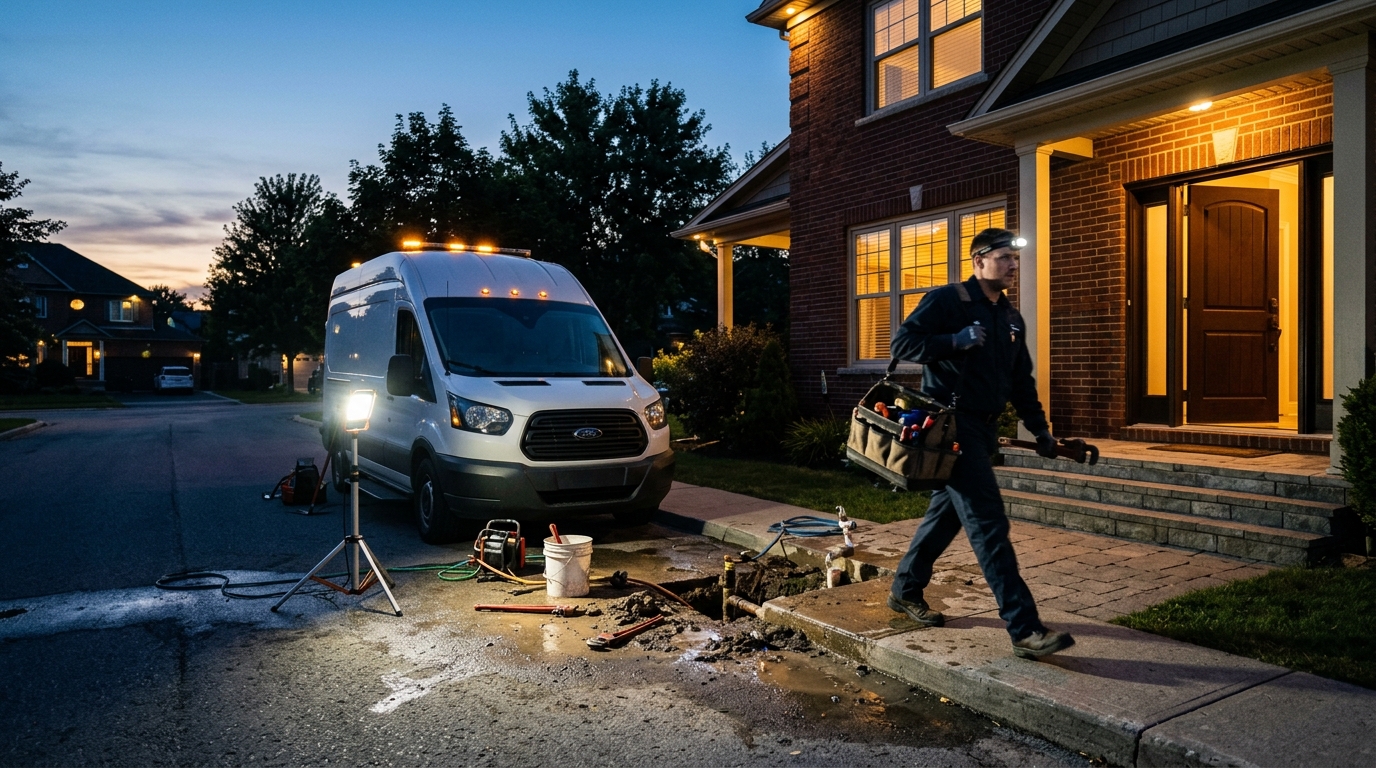
- On-Site Arrival & Stabilization: The technician arrives equipped with replacement pipe fittings, motorized pumps, and diagnostic equipment to halt water damage immediately and present an upfront repair plan.
Understanding Emergency Cost Factors
Emergency service involves higher overhead costs than scheduled appointments:
- Off-Hours Dispatch Rates: Labor rates for nights, weekends, and holidays compensate on-call technicians who mobilize immediately outside standard hours.
- Water Extraction & Temporary Shoring: Pumping standing water out of basements or installing emergency mechanical bypasses requires specialized industrial equipment.
- Insurance Documentation: Technicians provide itemized invoices and detailed damage reports suitable for filing immediate claims with your property insurance carrier.
Frequently Asked Questions
What constitutes a true plumbing emergency?
True emergencies involve active property damage or severe health and safety risks. These include burst water pipes with uncontrollable spraying water, raw sewage backing up into tubs or floor drains, complete loss of running water in winter, a leaking gas supply line, or a ruptured water heater tank flooding a living area.
Where is my home's main water shutoff valve located?
In Illinois homes with basements, the main shutoff valve is typically located near the front foundation wall where the municipal water service line enters through the floor or wall, usually beside the water meter. In homes on slabs or crawlspaces, check your utility closet or near your water heater.
What should I do while waiting for the emergency plumber to arrive?
First, shut off the main water valve. Turn off the electrical breaker to your water heater or any flooded rooms. Open faucets at the lowest point of your home to drain residual pressure. Clear furniture and valuables from standing water, take photos for insurance documentation, and avoid wading through standing water that may contain electrical hazards or sewage.
Why do emergency plumbing calls cost more than scheduled visits?
Emergency service requires mobilizing licensed personnel and equipped service vans outside standard business hours (such as late nights, weekends, and federal holidays), requiring dedicated on-call staffing and immediate route reprioritization.
Related Services
Burst & Frozen Pipe Repair • Sump Pump & Flood Defense • Water Heater Repair • Drain Cleaning & Clogs
Facing an Urgent Plumbing Crisis in Illinois?
Do not wait for water damage to escalate. Call our central emergency dispatch line immediately.
Call Emergency Dispatch: (217) 216-858624/7 priority routing for burst pipes, sewer backups, and major leaks across all Illinois communities.