Water Leak Detection Services in Illinois
Hearing running water when no taps are on, noticing warm spots on flooring, or shocked by an unexplained jump in your municipal water bill? Connect with licensed local Illinois plumbers equipped for non-invasive electronic leak detection.
Hidden plumbing leaks waste thousands of gallons of water and steadily destroy drywall, wood framing, and concrete slab foundations. Modern non-destructive acoustic and infrared equipment pinpoints the exact leak location without demolition.
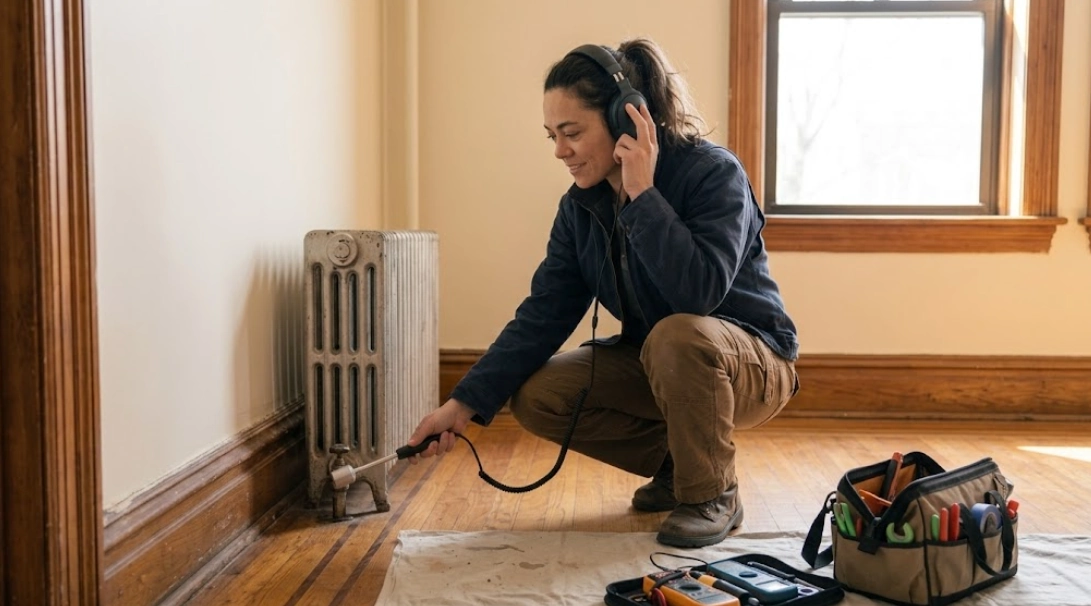
Recognizing the Warning Signs of a Hidden Water Leak
Unlike obvious faucet drips or running toilets, pressurized supply line leaks frequently remain concealed behind drywall, above ceiling tiles, or underneath poured concrete slab floors for weeks or months before surface moisture becomes visible.
Common signs that warrant immediate professional investigation include:
- Unexplained Increase in Water Bills: A sudden spike of 20% to 50% or more on your water utility bill with no change in household water usage strongly indicates a constant underground or in-wall leak.
- Audible Hissing or Rushing Water: Hearing a steady water rush behind bathroom walls or beneath basement floors late at night when the entire house is quiet.
- Warm Spots on Flooring: A warm section on hardwood, tile, or carpet indicates a leaking hot water line buried beneath a concrete slab foundation.
- Musty Odors and Unexplained Humidity: Persistent damp, musty smells or localized mildew along baseboards without an external water source.
- Reduced Water Pressure: A noticeable drop in shower or sink pressure throughout the entire home often signals water escaping before reaching fixtures.
Suspecting an Active Slab Leak? Protect Your Foundation
Unchecked slab leaks wash away supportive subsoil under concrete foundations, causing foundation cracking and costly structural settlement. Call our dispatch desk at (217) 216-8586 to connect with a certified leak detection specialist before structural damage occurs.
Non-Invasive Diagnostic Technology
Gone are the days when plumbers had to tear open multiple walls or jackhammer random trenches in basement floors to find a leaking pipe. Licensed specialists employ sophisticated non-destructive instruments:
- Acoustic Listening Devices: High-sensitivity ground microphones and acoustic amplifiers filter out background noise to hone in on the precise frequency of pressurized water hissing through microscopic pipe cracks.
- Thermal Imaging (Infrared Cameras): Infrared thermography detects subtle temperature differences across walls and floors, clearly showing hot or cold moisture plumes radiating from concealed lines.
- System Pressure Testing: Isolation testing using calibrated pressure gauges confirms whether the leak is on the hot water loop, cold supply line, or irrigation system.
Available Repair Methods
Once the exact location of the leak is verified, technicians recommend the most minimally invasive repair:
- Direct Spot Repair: If the leak is in an easily accessible drywall cavity or shallow subfloor, technicians open a small 12-inch access port, cut away the damaged copper or PEX section, and solder or crimp in a permanent replacement piece.
- Overhead Pipe Rerouting: For deep slab leaks where jackhammering finished flooring is undesirable, contractors often bypass the underground line completely by running a new, insulated PEX supply line through the attic or ceiling joists down to the affected fixture.
Understanding Cost Factors
Pricing for leak detection and repair depends on several variables:
- Location Complexity: Testing a single-story home with an accessible crawlspace is faster than diagnosing a multi-level commercial building or post-tension concrete slab foundation.
- Repair Accessibility: A simple drywall patch repair requires far less specialized labor than breaking through radiant heated tile flooring.
- Homeowners Insurance Coordination: Many Illinois homeowners insurance policies cover the exploratory cost and cosmetic tear-out required to access a sudden water leak.
Frequently Asked Questions
How can I check if I have a hidden water leak myself?
The simplest initial test is the water meter test. Turn off all faucets, washing machines, and ice makers in your house. Locate your water meter and look at the low-flow indicator (a small rotating red triangle or asterisk) or record the digital read-out. If the indicator moves while no water is running inside, pressurized water is escaping somewhere within your plumbing system.
What is a slab leak and why is it dangerous?
A slab leak occurs when copper water lines embedded in or running beneath your home's poured concrete foundation develop a pinhole rupture. Left undetected, leaking water erodes the supportive sub-base soil, creates foundation settling and structural cracking, encourages mold growth, and causes flooring to buckle.
How do plumbers locate leaks without destroying walls or floors?
Technicians use electronic acoustic ground microphones to listen for the high-frequency hiss of pressurized water escaping pipes, infrared thermal cameras to detect temperature differentials along concealed hot and cold lines, and pipe tracer transmitters to map the exact route of underground piping.
What factors influence the cost of leak detection and repair?
Diagnostic costs reflect the complexity of the piping layout and equipment used. Repair costs depend on the leak's physical location: an accessible copper pinhole behind drywall requires a simple pipe splice, whereas a deep slab leak requires either jackhammering a small opening or executing a cleaner overhead pipe reroute through ceilings.
Related Services
Burst & Frozen Pipe Repair • Water Heater Repair • Sewer Line Camera & Repair • Emergency Plumbing
Connect with a Local Illinois Leak Detection Specialist
Protect your property from hidden water damage. Call our dispatch desk to connect with an experienced diagnostic technician.